Rising Super Chef - Cook Fast
- 4.7
- Rating
- 10.00M
- Installs
- Free
- Price

 Analysis by App-foxy
I went into Rising Super Chef - Cook Fast expecting a simple time-management game, and that is exactly where its appeal lies. It gives me a bright, quick-moving kitchen routine built around preparing food, serving customers, and trying to keep several orders under control at once. The experience is easy to understand within minutes, but it still creates the kind of pressure that makes me say, “Just one more level,” even when I only intended to play during a short break.
My overall opinion is positive, with one important qualification: this is best enjoyed as a casual cooking challenge rather than as a deep restaurant-management simulation. The game focuses on speed, attention, and learning a workable order of actions. If you like compact sessions where a mistake can ruin an otherwise good run, it has plenty to offer. If you want detailed recipes, realistic business decisions, or a relaxed cooking sandbox, this probably will not satisfy you for long.
Choosing the right kind of cooking game
Before downloading, I would ask myself one simple question: do I want to manage a busy sequence of orders, or do I want to build and customize a restaurant over time? This game leans firmly toward the first option. Its appeal depends on whether quick decisions and a little pressure sound satisfying rather than stressful.
You May Also Like

 Blood Strike: 2.5 Anniversary
Blood Strike’s Loadouts Turn Every Drop Into a Tactical Gamble
A close look at Blood Strike’s custom loadouts: how fast access to signature weapons reshapes its battle royale rhythm, rewards preparation, and narrows the gap between fights.

 Pandora - Music & Podcasts
Pandora’s Music Is Easy to Start, but Harder to Recover
Pandora’s strength is its low-effort path from a seed to a station. Its weak spot is how much confidence it asks you to place in connection, setup, and quiet recovery.

 8 Ball Pool
 Is Built on Rivalries, Rematches, and Routine
A close look at the rivalries, rematches, shared routines, and unanswered safety questions that turn a quick pool match into a persistent mobile community.

 Samsung Music
’s Quiet Strength Is Playing What You Already Own
Its reach comes less from spectacle than from dependable access to a personal library. That simplicity is both the app’s strongest retention engine and its ceiling.

 AccuWeather: Weather Radar
AccuWeather Review: A Quick, Clear Forecast for Everyday Decisions
For everyday plans, the best forecast is the one you can understand quickly. AccuWeather makes rain timing, radar, and local conditions easy to act on, with a few trade-offs.

 Hill Climb Racing
Why Hill Climb Racing Still Turns Crashes Into One More Run
A tiny car, a bumpy hill and one more upgrade: Hill Climb Racing keeps resurfacing because its simple chaos makes every near-miss feel personal.
More From Our News Desk
View All News


That makes it a useful choice for short gaps in the day. A few minutes in a waiting room, a brief pause between chores, or a commute where I can safely use my phone are all natural moments for a self-contained kitchen challenge. I do not need to keep track of a long plot or return to a sprawling management plan; I can concentrate on the round in front of me.
Fast kitchen decisions are the heart of the experience
I find that the key choice here is whether a busy queue feels like a fun little puzzle or an unwanted source of pressure. In this section, I’d look at what the game asks of your attention and when that style fits best, so it’s easier to judge whether its kitchen pace belongs in your everyday breaks.
Why the basic loop works so well
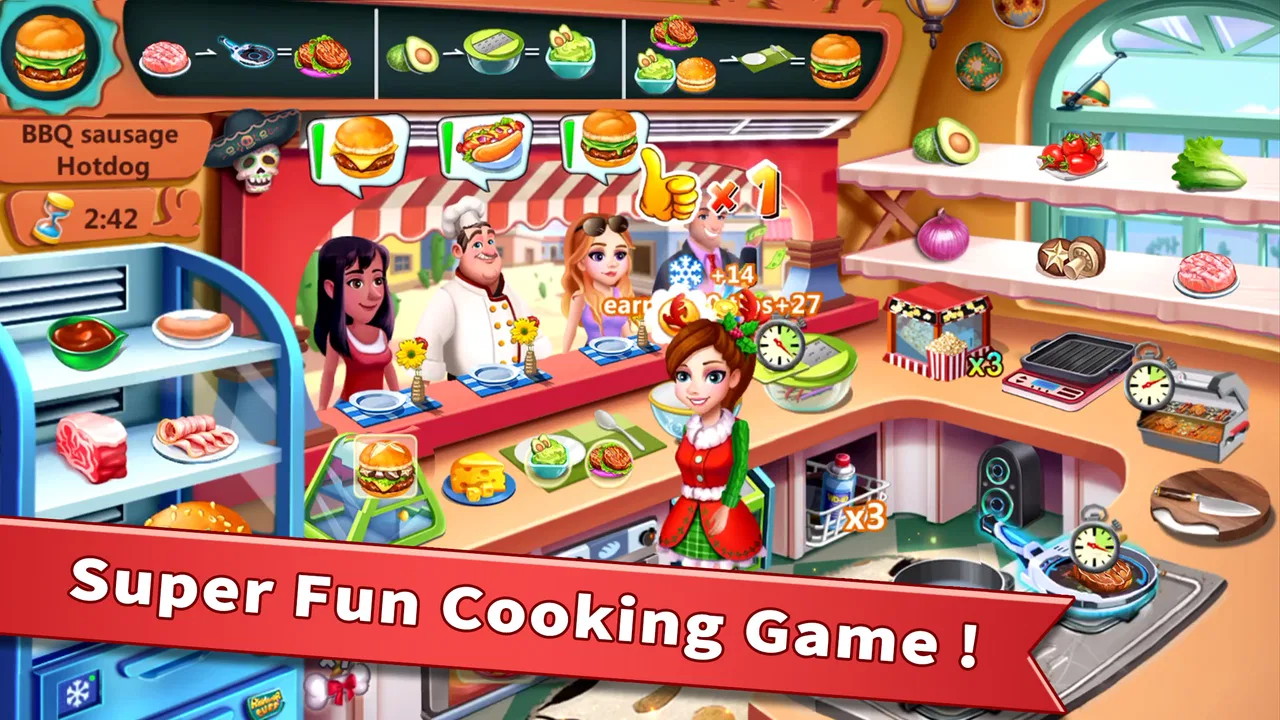
The central routine is immediately readable. Customers arrive, orders appear, and I need to prepare the requested food quickly enough to keep the queue moving. Burgers, pizza, coffee, and bakery-style items give the kitchen a familiar theme, but the real challenge is not memorizing culinary facts. It is deciding what deserves attention first while several tasks compete for it.
That distinction matters. I am not playing to discover authentic cooking techniques; I am playing to improve my timing. A successful round often depends on starting one item, preparing another, and returning to the first at the right moment. The satisfaction comes from turning a messy sequence of requests into a smooth rhythm. Once I find that rhythm, the kitchen feels less like frantic tapping and more like a small puzzle I am solving in real time.
The game’s strongest quality is how quickly it communicates cause and effect. Serve someone promptly and the flow feels manageable. Hesitate, misread the order, or concentrate too long on one customer, and the pressure builds. That makes each session useful even when I do not have much time. I can play for a few minutes, finish a small objective, and put the phone away without needing to remember a complicated story or control system.
Small habits make a noticeable difference
One of the more useful strategies I developed was to treat the customer line as a priority list rather than simply serving whoever appeared most recently. I watch which order is closest to becoming urgent, then use any spare moment to prepare the next item that can be completed without interrupting the current one. This sounds obvious, but the game becomes much easier once I stop reacting to every new request independently.
Another practical habit is avoiding unnecessary movement between stations. When I am already working on one part of an order, I try to complete the nearby action before crossing the kitchen for a less urgent request. The time saved is small in isolation, yet those small gains add up when several customers are waiting. This is the kind of lesson that the game teaches through repetition rather than through a long tutorial.
I also found that speed is not always the same as rushing. Tapping immediately can create a worse sequence if it leaves a nearly finished order unattended. The better approach is to build a short mental queue: what is cooking, what can be served now, and what should be started next. That makes the game a little more thoughtful than its cheerful presentation first suggests.
A friendly presentation with a clear casual focus
The visual and thematic direction keeps the tone light. The kitchen setting, food-centered tasks, and short bursts of activity make it approachable for players who do not normally spend time with simulation games. It feels closer to an arcade-style restaurant challenge than to a serious culinary simulator, and I think that is the right way to judge it.
The age rating of Everyone also fits the accessible presentation. I would consider it suitable for someone looking for uncomplicated food-themed play, though younger players may still need help understanding that the fastest action is not always the best action. The rules are easy to grasp, but improving performance requires patience and attention.
It is also worth noting that the game is free to start. That makes it easy to try without committing money first. There are in-app purchases ranging from $0.99 to $24.99 per item, so I would approach spending carefully. My advice is to play enough to decide whether the repeating service loop genuinely holds your interest before buying anything. A purchase cannot fix a gameplay style you simply do not enjoy.
Where it sits among cooking games
Compared with a relaxed cooking app, this one is much more concerned with urgency. You are not mainly experimenting with ingredients or decorating dishes; you are trying to keep orders moving. Compared with a conventional restaurant-management game, it gives me less reason to think about staffing, menus, finances, or long-term expansion. Its focus is narrower, but that narrow focus is also what makes it convenient.
I would choose this over a slower management title when I want immediate interaction and a clear short-term goal. I would choose a more detailed simulation when I want to plan a restaurant over a longer period or make decisions that continue to matter after a single round. The comparison is not about which style is better. It is about whether I want moment-to-moment execution or broader management.
There is also a useful distinction between this kind of game and open-ended cooking titles. In a creative kitchen game, the pleasure often comes from experimenting at my own pace. Here, a queue gives each decision a deadline, so there is less room to pause and try things simply for fun. I would pick the more open alternative when I want to unwind without a score or clock shaping my choices.
The main weakness is repetition under pressure
The same structure that makes the game accessible can eventually make it feel repetitive. Once the basic rhythm becomes familiar, the enjoyment depends heavily on whether I still want to improve my timing. Players who need constant narrative changes, extensive customization, or a large variety of strategic systems may find the loop too focused.
The pressure can also be tiring rather than entertaining. A hectic session is fun when I am in the mood for it, but it is not ideal when I want to unwind with no chance of falling behind. The game asks me to stay alert, and that means it is better for an active break than for bedtime relaxation. Someone seeking a calm food-themed pastime may prefer a title built around decorating, collecting, or free-form preparation.
There is a second trade-off in the free-to-play structure. Because optional purchases are present, I would not recommend treating every difficult moment as a reason to spend. The more useful test is whether I can enjoy the ordinary progression and accept occasional friction. If I feel pushed to buy simply to maintain interest, that is a sign to stop rather than continue spending.
Who will get the most from it
This is a good fit for players who enjoy time-management games, quick decision-making, and clear performance goals. It works especially well for people who like replaying a level to improve their sequence instead of moving on immediately. The food theme makes the action approachable, while the demand for prioritization gives experienced casual players something to refine.
A realistic use case is a short commute, a waiting room, or a few minutes between tasks. I can start a session without preparing a long strategy, focus on the current kitchen, and stop when the round is over. It is also suitable for someone introducing a younger or less experienced player to simulation-style games, because the subject is familiar and the main actions are easy to recognize.
I would be more cautious recommending it to players who dislike timers, queues, or repeated attempts. It is also not the right choice for someone searching for a realistic chef simulator. The title may use cooking as its theme, but the skill being tested is coordination under pressure. If you want to learn recipes or manage a believable restaurant operation, another category of game would serve you better.
For a parent considering it for a child, I would focus less on the food theme and more on the pace. The Everyone age rating signals broad accessibility, but the quick decisions still ask players to stay attentive. It can be a friendly introduction to prioritizing tasks, while a child who becomes frustrated by timed play may enjoy a slower creative game more.
Making a sensible choice about spending and switching
Since the game is free to download, the main decision is whether its repeated service rhythm holds my attention. I would try it without making a purchase and notice what I enjoy: the challenge of juggling orders, or simply the novelty of the kitchen theme. If the pressure itself is what keeps me engaged, optional spending may not add much to that core appeal.
Switching to another kind of cooking game is easy in principle, but the trade-off is a different pace rather than a direct replacement. A management-focused alternative is better for long-term planning; a relaxed cooking title is better for experimentation; this one is for quick execution. I would not keep playing out of habit if I consistently want a calmer or more strategic experience. Choosing the right category matters more than trying to make one game serve every mood.
Device and download details worth knowing
The game comes from Mini Stone Games - Chef & Restaurant Cooking Games and is listed as a simulation game. It was released on May 4, 2017, and the current version is 10.8.1. Compatibility begins with Android 7.0, which is useful to check before installing on an older phone or tablet.
Its popularity is substantial: it has passed 10 million installs, with an average rating of 4.7 from around 237 thousand ratings and roughly 13 thousand written reviews. Those figures do not replace personal taste, but they do suggest that the quick restaurant format has found a broad audience. Since the game is free, trying the opening experience is the sensible way to see whether its pace suits you.
For someone wondering whether it is a serious simulation or a quick arcade-like game, I would describe it as the latter with a simulation label. Its cooking theme gives the actions context, but the appeal rests on juggling requests rather than learning a detailed kitchen workflow. That distinction is useful before downloading: choose it for active play, not for realistic culinary practice.
My verdict after spending time in the kitchen
Rising Super Chef - Cook Fast succeeds because it understands its own purpose. It is not trying to be a complete restaurant business simulator. Instead, it gives me a compact kitchen challenge where prioritizing orders, keeping a steady rhythm, and recovering from mistakes are more important than complex systems.
I recommend it to casual players who want energetic sessions, food-themed action, and a reason to replay levels for better timing. I would skip it if your ideal cooking game is slow, creative, realistic, or management-heavy. For everyone else, the free entry point makes the decision easy: try it, resist spending until the loop proves itself, and pay attention to whether the pressure feels motivating or exhausting. In my experience, when I want a quick burst of organized chaos, it delivers exactly that.
FAQs for Rising Super Chef - Cook Fast
01What is Rising Super Chef - Cook Fast about?
Rising Super Chef - Cook Fast is a time-management cooking game where you prepare meals, serve hungry customers, and expand your culinary business. You move through different locations, unlock recipes, upgrade kitchen equipment, and try to complete orders before customers lose patience. The gameplay is fast, colorful, and focused on short levels that become progressively more demanding.
02Is Rising Super Chef - Cook Fast free to download and play?
Yes, the game can generally be downloaded and played for free, allowing you to progress through its main cooking levels without an initial purchase. However, it may include optional in-app purchases for coins, boosters, extra lives, or other helpful items. Players should also expect advertising in some versions, so checking the store listing and purchase settings is recommended before downloading.
03Can I play Rising Super Chef - Cook Fast without an internet connection?
Many of the core cooking levels can often be played offline once the game has been installed, which makes it suitable for short sessions while traveling or when a connection is unavailable. Nevertheless, certain features, advertisements, updates, rewards, synchronization, or in-app purchases may require internet access. Offline availability can also vary depending on the device and game version.
04Is Rising Super Chef - Cook Fast suitable for children?
The game is generally easy to understand because it uses simple touch controls, bright visuals, and cartoon-style cooking challenges. It can be entertaining for children and casual players, but parents should review the age rating and privacy information because the app may contain advertisements or optional purchases. Younger children may also need supervision to avoid accidental transactions or excessive playtime.
05What are the main advantages and disadvantages of the game?
The main advantages are its quick levels, straightforward controls, colorful presentation, wide selection of recipes, and gradually increasing challenge. It is easy to start and works well for players who enjoy restaurant and time-management games. On the other hand, the later stages may feel repetitive, progress can become slower, and ads or purchase prompts may interrupt the experience for some players.
Pros
- Fast-paced levels make each cooking session feel energetic and engaging.
- A wide variety of recipes keeps the gameplay from becoming repetitive too quickly.
- Simple controls are easy to learn
- even for players new to cooking games.
- Restaurant upgrades provide clear goals and a satisfying sense of progression.
- Bright visuals and cheerful presentation make the game appealing to casual players.
Cons
- Later levels can become difficult without careful timing and upgraded equipment.
- Energy or waiting systems may interrupt longer play sessions.
- Some upgrades and boosts can require substantial in-game currency.
- The frequent pace may feel stressful rather than relaxing for some players.
- Progress can feel repetitive when replaying levels to earn better rewards.

Rising Super Chef - Cook Fast
Gallery